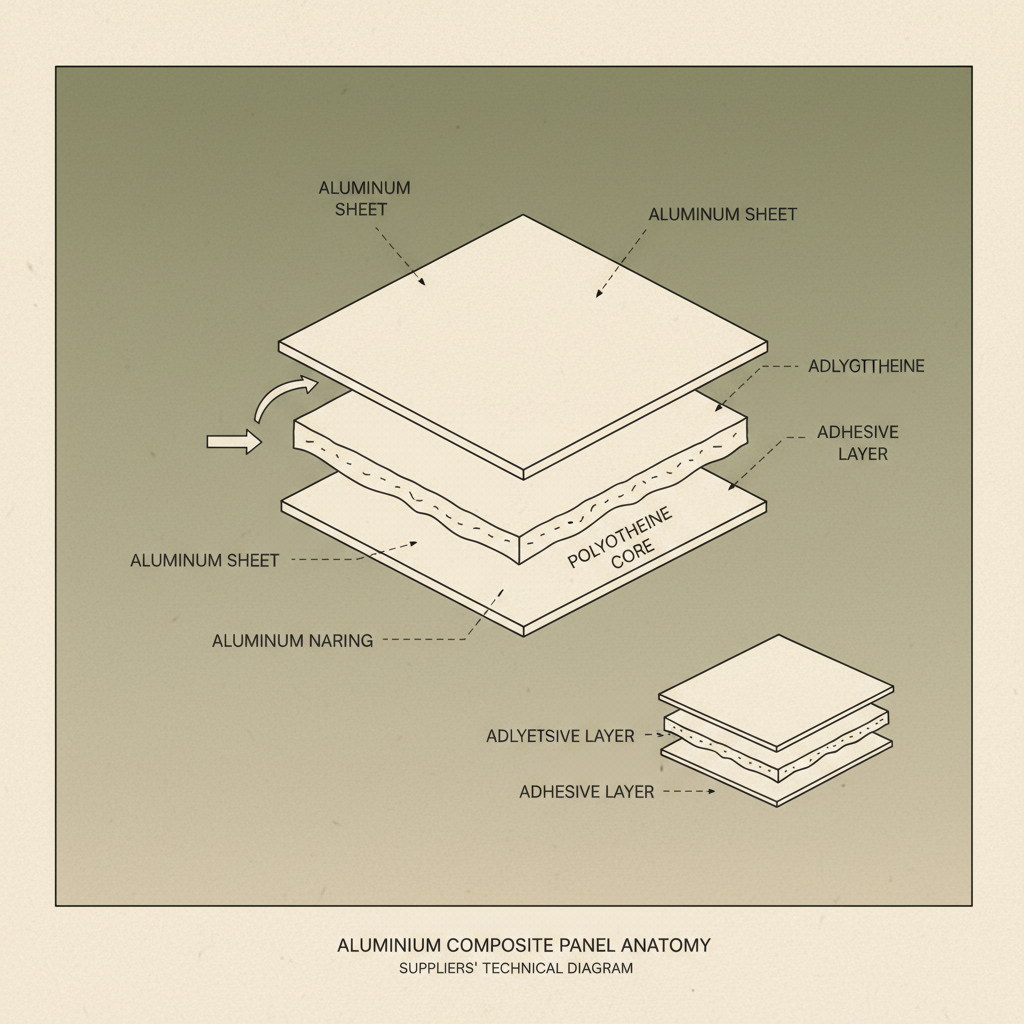
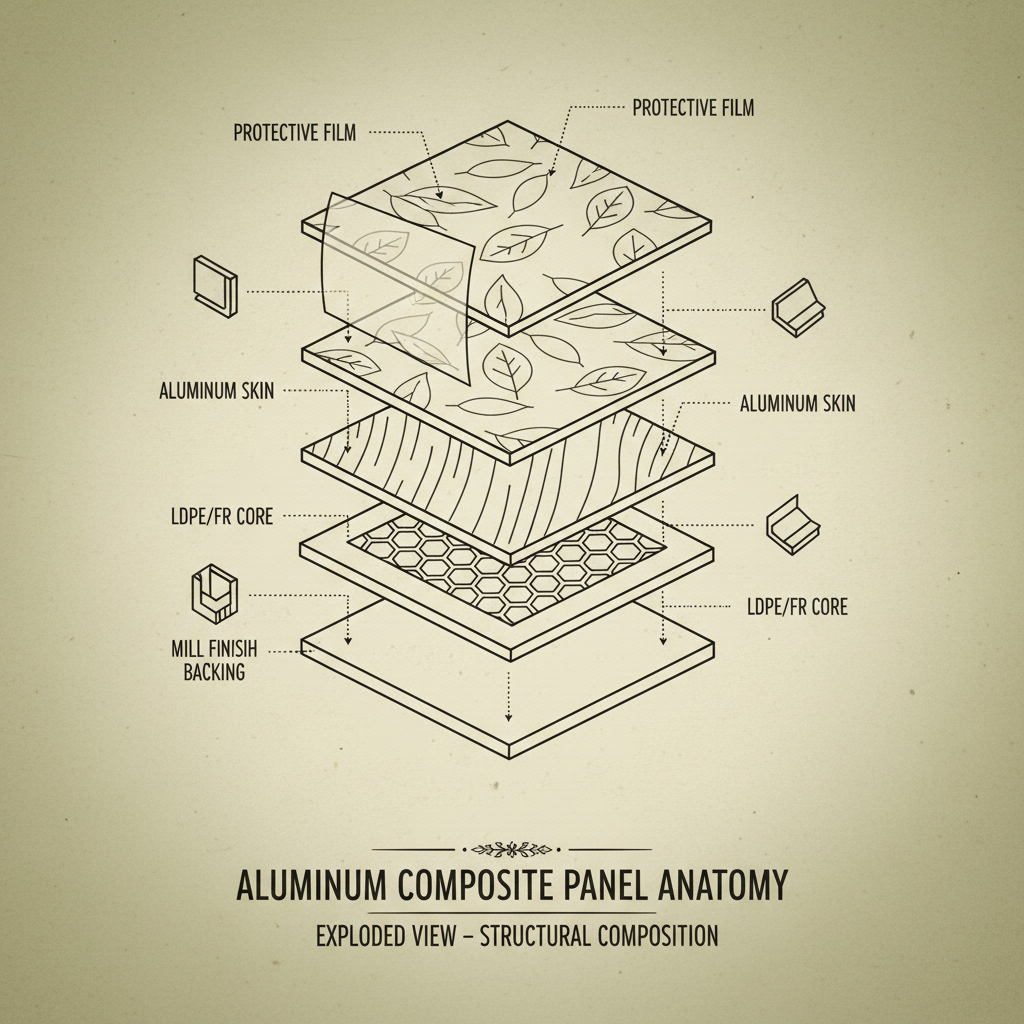
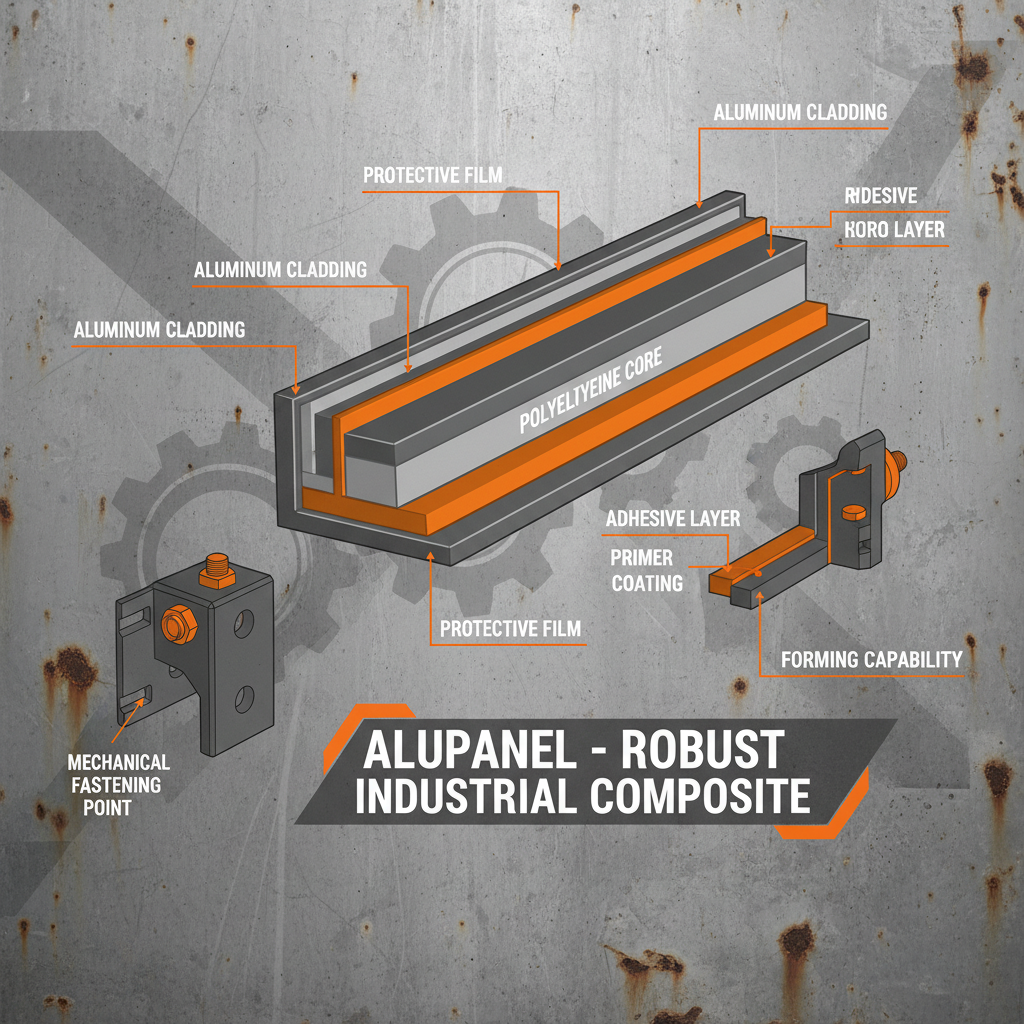
Understanding the 3mm acp sheet price requires a look into the synergy between aluminum grade, core material, and surface coatings. Aluminum Composite Panels (ACP) are engineered materials consisting of two thin aluminum sheets bonded to a non-aluminum core, providing a lightweight yet rigid solution for modern architecture.
For procurement teams and architects, the cost of 3mm ACP is not merely a purchase price but a calculation of long-term value, including weather resistance, fire safety certifications, and installation efficiency. Variations in price typically reflect the difference between PE (Polyethylene) cores and FR (Fire Retardant) cores.
This guide provides a technical analysis of cost drivers, performance metrics, and selection criteria to help you optimize your material budget without compromising structural integrity or safety standards in facade engineering.

1Core Cost Drivers of 3mm ACP

The pricing of 3mm ACP sheets is primarily dictated by the raw material costs of aluminum coils and the chemical composition of the core. Aluminum is a commodity; therefore, fluctuations in the global LME (London Metal Exchange) directly impact the final quote. The thickness of the aluminum skins (usually 0.2mm to 0.5mm) significantly alters the rigidity and cost.
Surface coatings are another critical factor. PVDF (Polyvinylidene Fluoride) coatings are more expensive than PE coatings because they offer superior UV resistance and longevity for exterior applications, whereas PE is typically reserved for interior signage and décor.
Manufacturing precision also plays a role. Advanced production lines, such as those used by Foshan Jiashuncai Building Materials Co., Ltd., ensure consistent flatness and bonding, reducing waste during fabrication and lowering the total cost of ownership for the end-user.
2Technical Specifications and Material Quality
A high-quality 3mm ACP sheet is defined by its bonding strength and core homogeneity. The lamination process requires precise temperature and pressure control to prevent delamination under extreme thermal expansion and contraction cycles common in outdoor environments.
Quality assurance often involves testing for peel strength and impact resistance. Panels that meet ISO9001 and ROHS standards ensure that the materials are not only durable but also environmentally safe for international markets including the EU and North America.
The flatness of the panel is a key technical metric. Controlled cooling rates during the shaping process ensure that the panels do not warp, which is critical for achieving a seamless mirror-like finish on large-scale curtain wall projects.
3Application Scenarios and Suitability
3mm ACP is highly versatile, making it the standard choice for exterior cladding, corporate facades, and interior ceiling systems. Its high strength-to-weight ratio allows for the creation of complex geometric shapes without adding excessive dead load to the building structure.
In commercial applications, such as petrol stations or retail storefronts, the focus is on brand visibility and weatherability. Here, PVDF-coated 3mm sheets are preferred for their ability to maintain color consistency over decades of sunlight exposure.
Interior design utilizes ACP for baffle ceilings and wall partitions. In these settings, PE-core panels are often sufficient, offering a cost-effective way to achieve a modern, metallic aesthetic while providing basic moisture resistance.
4Performance Benchmarking and Metrics
Evaluating the performance of 3mm ACP involves comparing its mechanical properties against traditional materials like solid aluminum or steel. ACP offers a significant advantage in terms of weight reduction, which translates to lower shipping costs and faster installation times.
Performance is measured through fire-safety tests (such as SGS A2 and B1 certifications) and environmental stress tests. The ability of the panel to resist corrosion in coastal areas depends heavily on the quality of the primer and clear coat application.
3mm acp sheet price Performance Metrics
When analyzing the ROI, users should consider the "life-cycle cost." While a cheaper PE-core panel might lower initial capital expenditure, the maintenance and replacement costs of a low-grade coating can exceed the initial savings within five years.
5Procurement and Selection Strategy
Selecting a supplier requires a balance between production capacity and certification. A factory with a large-scale operation, such as a 30,000m² facility producing 500,000m² per month, can offer better price stability and shorter lead times for large engineering projects.
Procurement teams should request samples to test the "easy-to-process" nature of the ACP. High-quality panels should be easy to route, fold, and fabricate without cracking the core or peeling the surface film.
Comprehensive solutions are often more valuable than material-only purchases. Providers that offer design, fabrication, and on-site management services reduce the risk of installation errors and material waste on site.
6Industry Standards and Safety Compliance
Global compliance is essential for ACP exports. Certification for the EU, Australia, USA, and Canada ensures that the product meets specific regional requirements for toxicity, smoke emission, and structural load.
The ROHS and REACH certifications are critical for projects focusing on sustainability. These ensure that the panels do not contain hazardous substances, making them suitable for hospitals, schools, and green-certified buildings.
Compliance also extends to the manufacturing process. Following a strict 6-step process—from raw material inspection to professional packaging—guarantees that the finished 3mm ACP sheet maintains its properties throughout the supply chain.
7Comparison of ACP Core Variations
The choice between core materials is the most significant variable affecting both the 3mm acp sheet price and its application. While PE is the most economical, its lack of fire resistance limits its use in many modern jurisdictions.
FR (Fire Retardant) cores introduce mineral fillers into the polyethylene to slow down flame spread, providing a middle ground in both cost and safety. A2 cores use a completely different mineral-based composition to achieve non-combustibility.
| Core Type | Fire Rating | Primary Use | Relative Cost |
|---|---|---|---|
| PE Core | Low (Combustible) | Interiors / Signage | Economical |
| FR Core | Medium (B1) | Low-Rise Exteriors | Moderate |
| A2 Core | High (Non-combustible) | High-Rise Facades | Premium |
| Unbreakable Core | Variable | High-Impact Areas | Moderate |
| Spherical Core | High | Specialized Engineering | Premium |
| Anodised ACP | Variable | Industrial / Architectural | Moderate |
Ultimately, the selection should be based on the specific building code of the project location. Using an under-specified core can lead to legal liabilities and safety risks, while over-specifying can lead to unnecessary budget inflation.
Frequently Asked Questions
Conclusion
Optimizing the 3mm acp sheet price involves more than selecting the lowest quote; it requires a technical alignment between the project's safety requirements, environmental exposure, and aesthetic goals. By understanding the trade-offs between PE, FR, and A2 cores, and prioritizing PVDF coatings for exterior work, procurement teams can ensure long-term durability and regulatory compliance.
For those seeking professional engineering solutions and high-capacity production, reviewing the technical specifications and available product ranges at www.acmfactory.com can provide a foundation for making an informed decision on material selection and facade implementation.