since 2003
Professional Aluminum Composite Panel Manufacturer
since 2003
Professional Aluminum Composite Panel Manufacturer
en

High Quality Aluminum Honeycomb Panels 4x8 Price and Performance
When sourcing cladding materials for high-performance architectural projects, identifying the balance between structural rigidity and cost-efficiency is paramount. The 4x8 foot format has become an industry standard due to its compatibility with most fabrication machinery and efficient shipping logistics. These composite panels, featuring a lightweight core sandwiched between durable aluminum skins, provide an essential heat buffer and structural integrity for modern facades. For procurement managers and engineers, understanding the variables that influence the aluminum honeycomb panels 4x8 price is the first step in optimizing project budgets without compromising on safety or aesthetic quality.

Technical Composition and Material Performance of Composite Panel Systems
Modern architectural panels are engineered for extreme durability. Our high-performance PVDF aluminum composite panels utilize a multi-layer construction designed to withstand environmental stressors. The process begins with a strict raw material inspection of aluminum coils and PE particles to ensure base purity. Through an automated spray line, a primer, topcoat, and clear coat are applied, creating a surface that is not only visually sleek but also resistant to UV radiation and chemical corrosion.
The core material plays a critical role in the panel's performance. We offer various configurations, including PE cores and advanced fire-rated options (A2/B1 non-combustible ratings), which are essential for meeting international building codes. The lamination process occurs under high temperature and pressure, ensuring a permanent bond between the aluminum skins and the core, which prevents delamination even under thermal expansion and contraction cycles.

Architectural Applications and Versatile Integration Scenarios
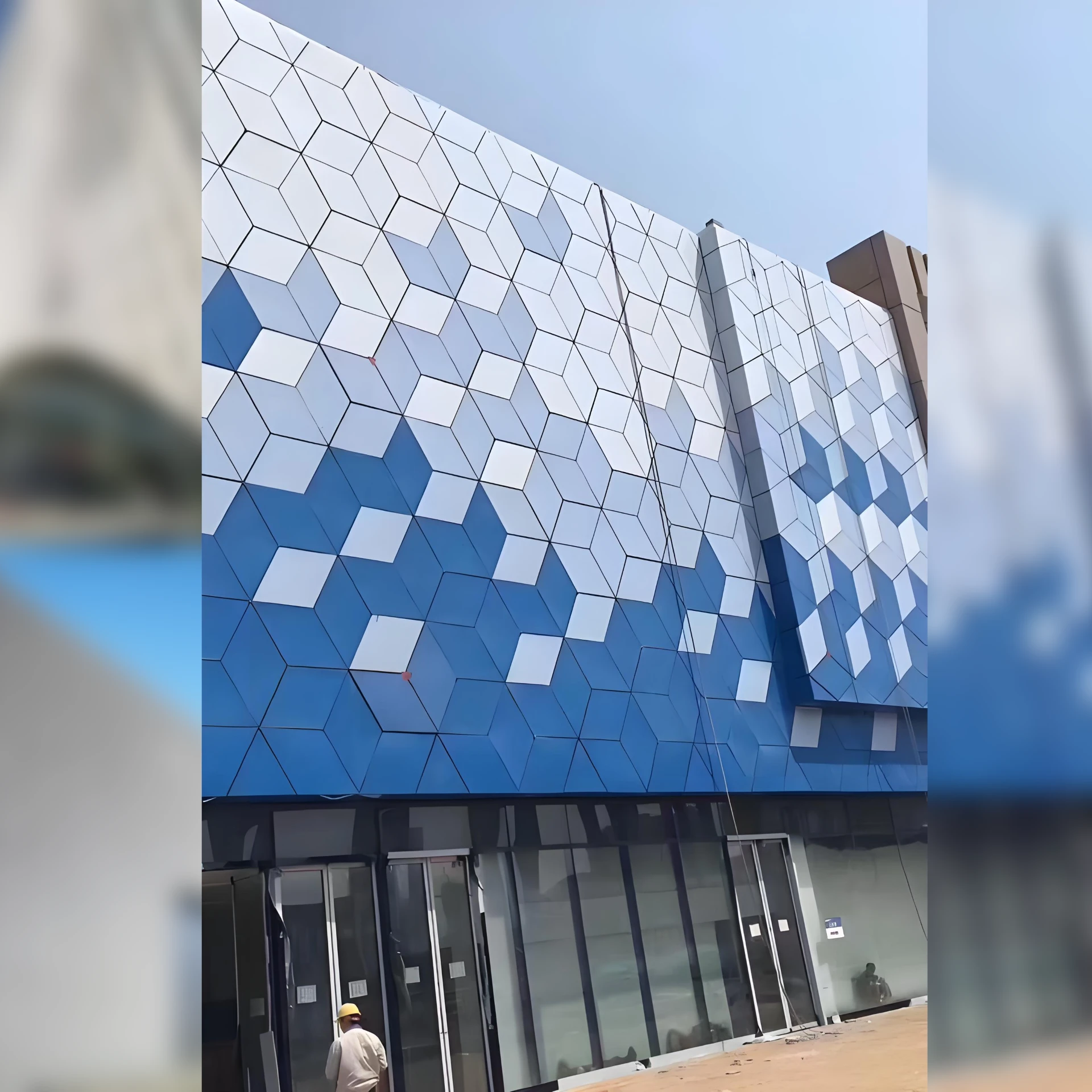
The versatility of aluminum composite materials allows them to be integrated into a vast array of commercial and industrial environments. In exterior facade systems, they serve as protective thermal insulation curtains and siding, offering a modern aesthetic with minimal maintenance. The inherent rigidity of the panels makes them an ideal choice for high-end signage and visual communication, providing a flatter and more durable surface than traditional substrates.
Beyond facades, these materials are increasingly utilized in specialized fabrication. From interior decoration and ceiling baffles to lightweight structural uses in the RV industry, the ability to cut and frame these panels with precision allows for seamless integration. Whether it is a mirror finish for a luxury retail space or a corrugated surface for industrial cladding, the material adapts to the engineering requirements of the project.
Strategic Procurement Considerations for Global Buyers
Selecting a supplier involves more than just comparing the initial aluminum honeycomb panels 4x8 price; it requires an evaluation of the total cost of ownership and quality assurance. Buyers should prioritize manufacturers who hold comprehensive certifications, such as ISO9001, SGS, and INTERTEK Fireproof certificates. These documents ensure that the materials will pass local building inspections in the EU, Australia, the United States, and Canada.
Furthermore, the capacity of the factory to handle various project scales—from 100m² to 100,000m²—is a key indicator of reliability. A professional provider should offer complete construction solutions, including material selection, fabrication, and on-site management supervision. This holistic approach reduces the risk of installation errors and ensures that the final architectural result aligns with the original design specifications.
Material Selection and Performance Matrix
| Core Type | Fire Rating | Primary Application | Weight Profile |
|---|---|---|---|
| Standard PE Core | B3 (Standard) | Signage & Interior | Ultra-Lightweight |
| FR Grade Core | B1 (Fire Retardant) | Commercial Facades | Lightweight |
| Non-Combustible | A2 (High Safety) | High-Rise Exteriors | Medium-Light |
| Honeycomb Core | Application-Dependent | Heavy-Duty Cladding | Rigid-Light |
| Custom Composite | Specified | Specialized Engineering | Variable |
Manufacturing Excellence and Quality Control Protocols
Quality is guaranteed through a rigorous six-step production process. Starting with surface cleaning to remove oil and oxidation, every sheet undergoes a controlled coating process. The cooling and shaping phase is particularly critical; by controlling the cooling rate, we ensure the flatness of the panels, which prevents the "oil-canning" effect often seen in lower-quality aluminum sheets.
Our 30,000m² facility is equipped with an advanced production line capable of producing 500,000m² per month. This scale allows us to provide competitive OEM and ODM services while maintaining strict adherence to ROHS and REACH standards. By integrating fully automatic alignment in our production lines, we eliminate human error in thickness and dimension consistency, ensuring every 4x8 sheet meets exact tolerances.
Future Trends in Sustainable Metal Cladding
The industry is shifting toward sustainable and eco-friendly materials. The use of PVDF coatings is becoming more refined to reduce VOC emissions while increasing the lifespan of the exterior finish. We are seeing a trend toward "intelligent" facades that integrate thermal buffering properties more effectively, reducing the energy consumption of the buildings they protect.
As global building codes become more stringent regarding fire safety and environmental impact, the demand for A2-rated and recycled aluminum content is rising. Moving forward, the integration of digital fabrication and precise cutting specifications will allow for even less material waste during installation, further enhancing the cost-efficiency and sustainability of large-scale curtain wall engineering projects.
Frequently Asked Questions About Aluminum Composite Panels
What is the typical use of aluminum composite panels in construction?
They are primarily used for exterior building facades, architectural cladding, signage, and interior decoration due to their lightweight nature and high durability.
How does the fire rating (A2/B1) affect the choice of panel?
Fire ratings determine where the panel can be legally installed; A2 non-combustible panels are typically required for high-rise buildings and public structures to meet strict safety codes.
Can these panels be customized for specific dimensions?
Yes, while 4x8 and 5x10 are standard sizes, custom dimensions can be produced to fit specific project requirements and reduce on-site waste.
What is the difference between PE and FR cores?
PE cores are standard polyethylene used for general purposes, while FR cores contain mineral fillers that retard fire spread, making them suitable for external cladding.
Which certifications should I look for in a supplier?
Look for ISO9001 for quality management, SGS and INTERTEK for fireproof performance, and ROHS/REACH for environmental and chemical safety.
How is the surface flatness maintained during production?
Flatness is ensured by controlling the cooling rate after lamination and using high-pressure rollers to maintain consistent thickness across the entire sheet.
Industry Technical References
- ISO 9001 Quality Management Systems Standards
- SGS International Testing and Certification Services
- Intertek Fire Safety and Material Testing
- EU REACH Regulation for Chemical Safety
For professional engineering solutions, material selection guidance, or a detailed quotation for your next project, our technical team is available 24 hours a day to provide supervision and quality control support.
Related Industry Insights